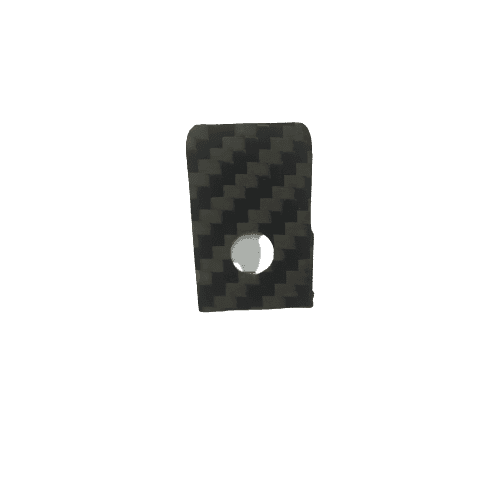
Keels are now part of your foil quiver. There are two possibilities for their use:
- Adjusting the float trim
- Constant pressure adjustment

Trim the float with a windfoil wedge
The first adjustment the windfoil wedge can make is to the float’s trim position in flight. A float that is nose-down is one whose nose will dive forward. A float that is nose-up is one whose nose will point upward. In these cases, a shim at the front or rear of the wing will optimize the overall trim during flight. If I place a shim at the front, it will lower the leading edge of the wing, which will then realign itself while flying. So with this movement, it’s easy to see that the nose of the board will rise. Conversely, a wedge at the rear of the front wing on a windfoil will bring the wing back into alignment, and the nose of the board will drop.
Constant pressure adjustment with windfoil wedge
Adding a shim to the stabilizer is necessary when there’s an issue with constant lift—that is, my board keeps trying to pop out of the water. This indicates that the stabilizer is generating too much lift. In this case, you need to place a shim at the rear of the stabilizer. This will adjust the stabilizer’s angle of attack to a slightly more negative setting and rebalance the board. Conversely, you might have a foil that’s very back-heavy. That is, it flies, but you have to push down hard with your back leg. In that case, you’ll place a shim at the front of the stabilizer. This will add kick, which will generate lift.
Conclusion
So to conclude:
- Adding a wedge to the stabilizer is really necessary when there is constant upward or downward movement.
- Adding a wedge to the front wing is useful when you feel uncomfortable because the position is too low or too high.
Read our complete guide to getting started with windfoil.