Paddleboarding has established itself as a trendy outdoor sport, accessible to beginners and experts alike. We give you our professional opinion on the right stand-up paddle equipment to choose, the right prices, but also on spots, accessories and paddles!
What's in it for me?
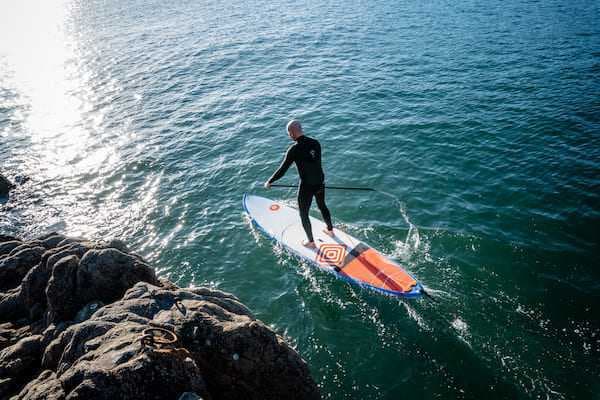
Firstly, stand-up paddling is a super all-round water sport. Generally speaking, it not only stimulates your cardio, but also the muscles of your upper body, legs and abdominal muscles. It’s also the perfect way to improve your balance!
Secondly, the sup is very versatile. All-around paddling for adventure or pleasure, competitive racing, family use, surfing and SUP foiling: you can do it all with this discipline, in all conditions, and that’s what we love about it. More than just kayaking and canoeing, you can take advantage of all the best the sea and whitewater have to offer.
How to choose the right paddle?
Depending on my level of paddling
If you’re a beginner and you’ve never really taken part in water sports, the first thing to consider is not so much what you do, but your level. It’s important to select an easy board to discover this sport. It would be a shame to give up on stand-up paddling as soon as you’ve made your first runs with equipment that’s too small. Width is particularly important, as it determines your stability.
For intermediate riders, or those who already practice other board sports such as kitesurfing or windsurfing, you can already start to orientate yourself according to your chosen sport (surfing, cruising…), but the best thing is to go for boards that offer a minimum of versatility and comfort, so as not to get into difficulty.
For SUP experts, practice defines your needs, and we’ll explain in detail which board is perfect for each activity, so you can get the most out of it!
What size and shape for my stand-up paddle?
Generally speaking, these are the parameters we’ll use to define the SUP’s shape. Note that for the same level, the bigger you are, the more width and length you’ll need to make life easier.
The length
GThe longer your paddle, the more it “glides”. In other words, an oar stroke is more efficient. Length also reduces the “row” phenomenon. If your sup is very short, it will tend to swivel to the right if you paddle to the left. It’s great in surfing to be agile on the wave, but not so great in competition or over long distances when you want to change sides as little as possible…
The width
It provides comfort and stability. On the other hand, it will make you slower and require more effort to maintain speed. If you’re just starting out, it’s very important to have a consistent width so as not to get into trouble.
Thickness
More important for inflatable paddles, which must have spread skins to guarantee minimum rigidity. As you increase, you reduce the feeling of gliding as you move further away from the water. A greater thickness also reduces balance, as you find yourself tossed about like a cork on the water past the 5-inch mark.
Nose shape
Pointed noses are ideal for racing or for distance work, as they can easily split the wave. In surfing or for beginners, noses become rounder, losing glide but gaining grip on waves. On rigid paddles, you can also work on the shape of the bow, hull and deck to make them more resistant to chop, for example.
The shape of the tail
They come in a variety of forms, but to put it simply, the more the tail is pinched, the more you gain in manoeuvrability and lose in stability. The wider it is, the less manoeuvrable you are on the wave, but the better your start and the more stable you are.
Choice according to your practice
Combined, these can be used to create sup shapes that are more or less suited to your level of practice. Here are the main shapes found on the market, and found in all the brands on sale.
Paddles for beginners
What you need is an intermediate length for versatility (in the 9/11 foot range), a generous, round nose and tail, and above all, good width!
Allround paddles
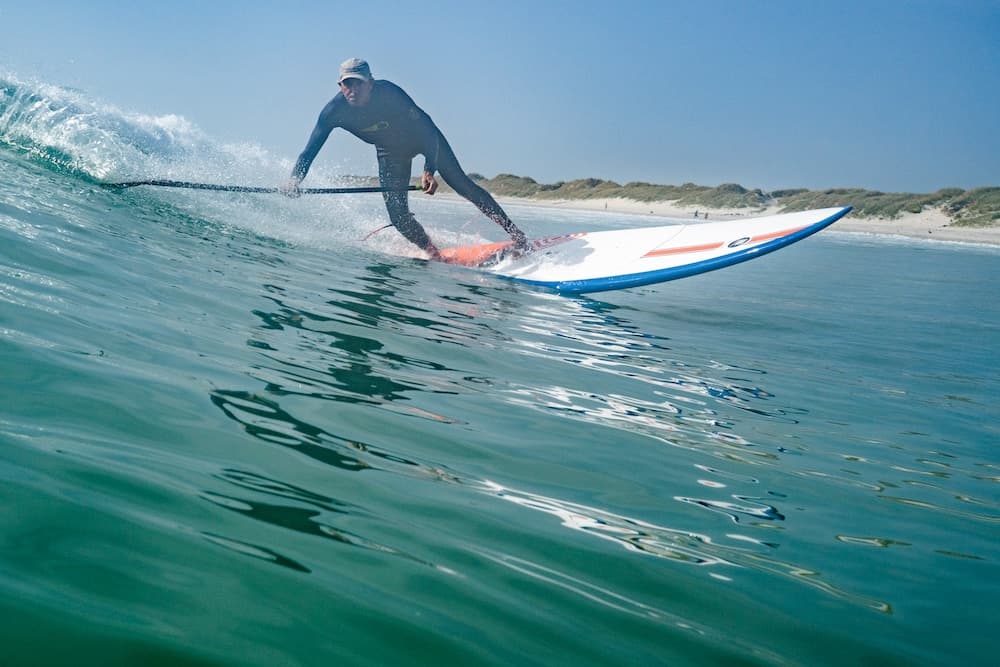
It’s a compromise between the wave and the promenade. Relatively short, between 9 and 11 feet, it is often rather wide, with a round nose and a comfortable tail. Ideal if you’re just starting out, for family use or for an intermediate user who wants to do everything without getting in over your head.
Touring paddles
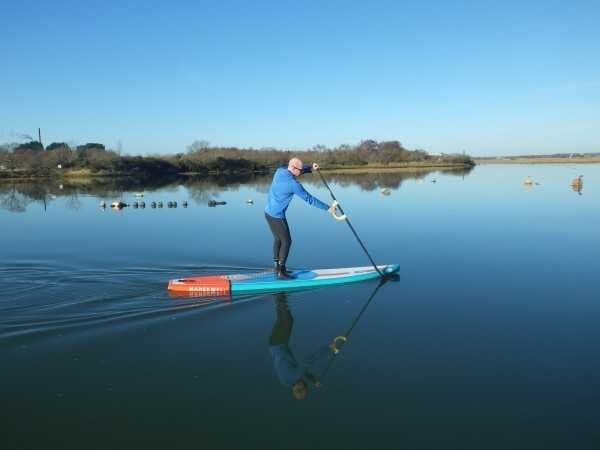
Longer than all-rounders, between 11 and 12 feet, with a more pointed nose, they often retain a little width. The longer length allows you to cover greater distances and row more efficiently, while keeping the shape affordable. They’re no longer relevant for waves, as they’re too long, but they’re still great at sea, even with a little chop. The larger models are ideal if you’re just starting out and don’t intend to surf with them. Note that there are even some for making doubles! These ranges are often available on rental sites, so don’t hesitate to consult our network of partners in France to find out more; the adventure may be worth the detour.
Paddles race
Long, often 12’6″ or more, they are also (very) slender, with pointed noses. If their balance is precarious, they are speed machines, especially on flat spots and long distances. For experienced users only.
Paddles for surfing
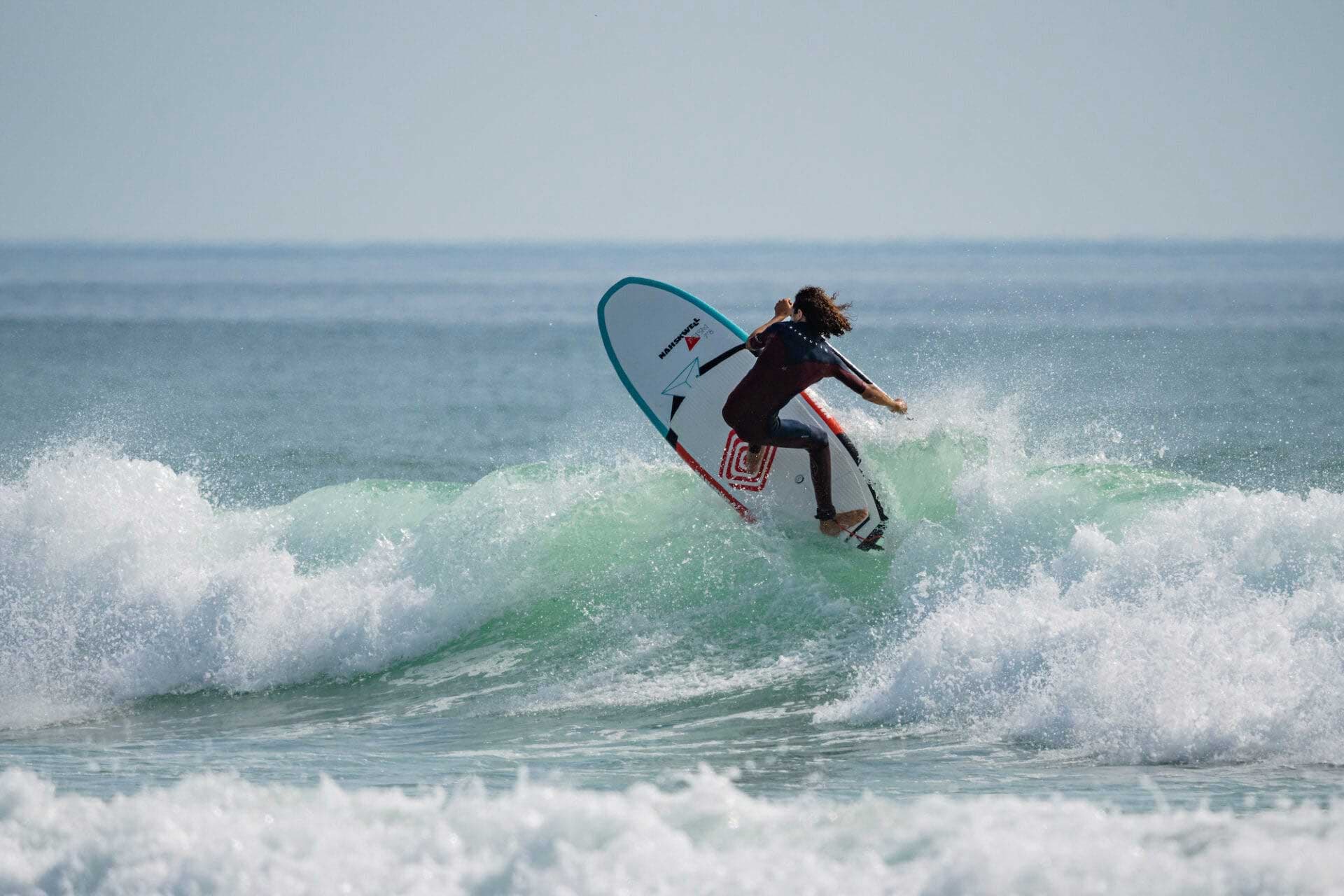
These are generally the shortest, under 10 feet, with a round nose. Very maneuverable, they have widths and tails specific to each model for different uses: a very pinched and thin tail for maximum agility to an almost rectangular tail for greater stability and power in soft waves.
| Practical walk | ~ 50-60 KG | ~ 70-80 KG | + 90 KG |
|---|---|---|---|
| All round | Length 30′ to 31′ – Width 10′ to 11’6 “ | Length 31′ to 32′ – Width 10′ to 11’6 ” | Length 32-36′ – Width 10’5 “ to 11’6 ” |
| Touring / exploring | Length 11’6 “ to 12’6 ” – Width 28′ to 30′ | Length 12’6 “ to 14′ – Width 29′ to 32′ | Length 12’6 ” to 14′ – Width 32′ to 34′ |
| Wave practice | ~ 50-60 KG | ~ 70-80 KG | + 90 KG |
|---|---|---|---|
| Beginner | Length 8’5“ to 9′ Width 30” to 31″ | Length 9′ to 10′ Width 31″ to 33″ | Length 10′ to 11′ Width 32″ to 36″ |
| Intermediate | Same size – Minimum volume = your weight + 35 to 40 L | Same size – Minimum volume = your weight + 35 to 40 L | Same size – Minimum volume = your weight + 35 to 40 L |
| Expert | Width 25″ to 28″ Volume = your weight to your weight + 30 L | Width 26″ to 29″ Volume = your weight to your weight + 30 L | Width 28″ to 32″ Volume = your weight to your weight + 30 L |
Paddles for foiling
One discipline that is becoming increasingly popular is sup foiling. We’ve put together a guide specifically for stand-up paddle foils.