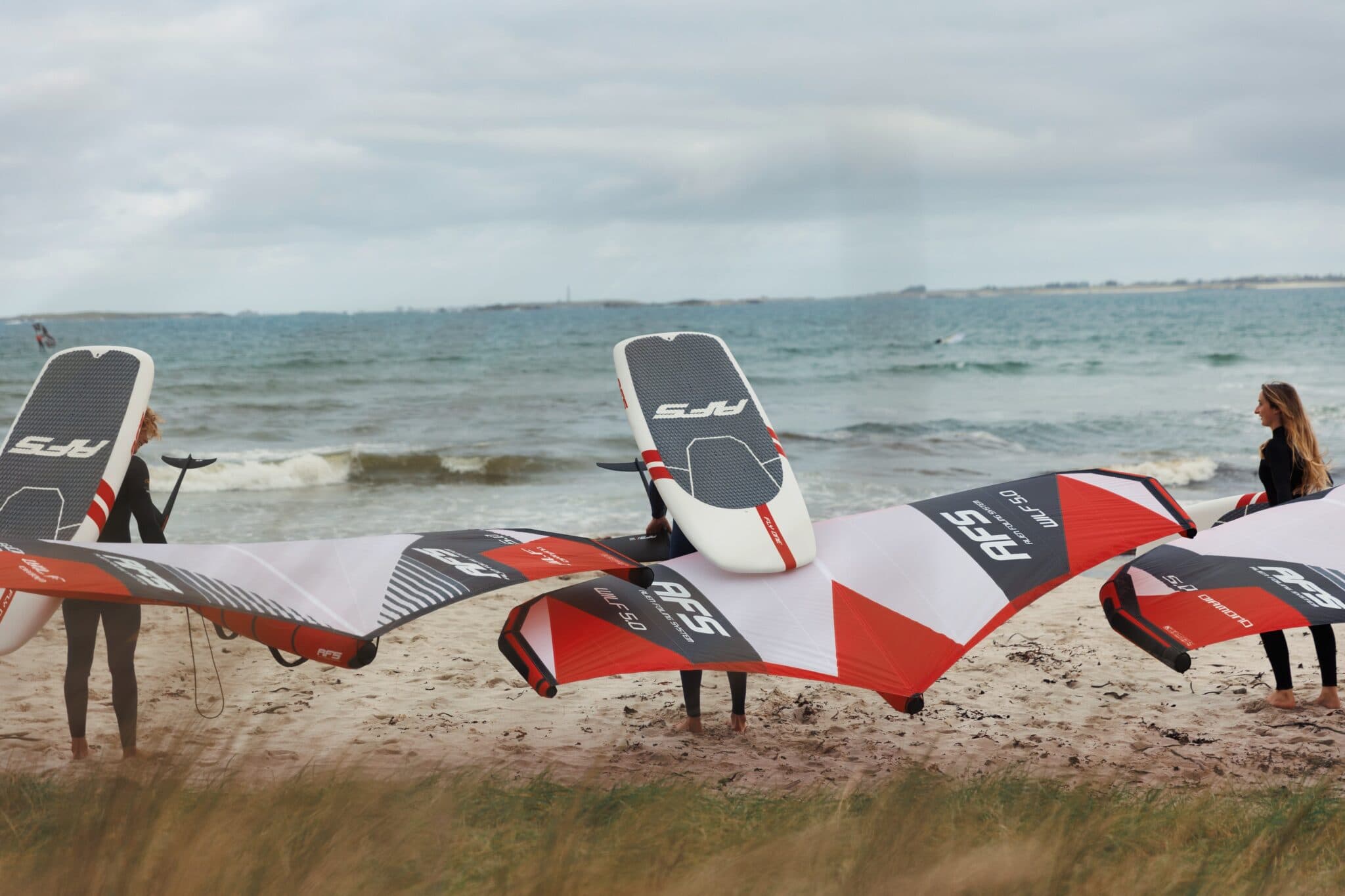
In wingfoil, as in all water sports, the wind is our natural driving force. And depending on its direction, our speed varies according to our attitude to the wind.
How strong is the wind to progress in wingfoil?
To get started and progress in wingfoiling, wind strength is extremely important. As a practitioner, you should favor moderate wind conditions, between 15 and 20 knots. Below this range, the wind is too light, making it difficult to take off and stay airborne. The ideal wind speed is 17-18 knots. Above 20 knots, the wind can make it more difficult to stabilize the foil, leading to more falls during takeoff when you are just starting out.

What factors need to be taken into account?
- The rider’s weight: someone who is lighter can sail with less wind (14-16 knots), while someone who is heavier needs stronger winds (18-20 knots).
- The size of the inflatable wing: A larger wing (5-6 m²) is ideal for beginners in moderate winds for riders weighing over 80 kg, while a smaller wing (4 m²) is more suitable for those weighing less than 70-75 kg. The stronger the wind, the smaller the wing size required.
- Skill level: Beginners need constant, steady wind to learn how to balance on the board. As they progress, wingfoilers will gradually be able to navigate in stronger winds, but don’t overestimate your abilities when you’re just starting out. With wingfoiling, you drift very quickly.
Always take the weather forecast into account and avoid gusty winds. Remember that conditions can change once you’re on the water.
What type of spot should you use to improve your wingfoil skills?

Choosing the right spot is essential for getting the most out of each session and progressing safely. A suitable spot should offer ideal conditions, both in terms of water conditions and wind strength and direction.
What are the criteria for an ideal wingfoil spot?

Wind direction: the best wind is side shore (parallel to the beach and therefore perpendicular to you when you leave the shore and head out to sea). Or slightly on shore (blowing slightly from the sea towards the land). Offshore wind (blowing 100% from land to sea) is risky and dangerous, as it can carry you away from the shore very quickly. The seabed and depth: a sandy seabed is safer if you fall and will prevent your equipment from breaking. Sufficient depth is also necessary to take off easily (minimum approx. 1.20 m). No waves: when learning, it is best to sail on flat or slightly choppy water, as chop makes it difficult to maintain balance. Whether your board is still stuck to the water or you are planing. The spot must be clear: avoid obstacles in the water such as rocks, breakwaters, and moored boats. Or if the water looks like a highway with too many people on the water (kitesurfing, windsurfing, wing surfing).
The best wingfoil spots for beginners are often lagoons or sandy beaches protected from large waves. The wind is steady and gentle, not exceeding 20-22 knots. Water and air temperatures must also be taken into account to ensure optimal comfort. It is easier to start in the spring, for example. This is because you will be able to string together sessions more easily throughout the year than if you start in November. You will then be able to enjoy the best conditions for progressing in wingfoiling.
What are the different wing foil sailing speeds?
In both sailing and wingfoiling, points of sail determine our heading and speed. They correspond to the trajectory you follow in relation to the wind direction, with some offering more speed than others. Even as a beginner, once you’ve mastered each point of sail, you’ll be able to move freely on the water. In wingfoil, the main gaits are crosswind, upwind and downwind.
1. Crosswind: this is the first speed to master in wingfoiling, as it makes it easier to balance on the board. When learning, this speed, where the wind blows perpendicular to your trajectory, allows the board to lift out of the water gradually and less abruptly.
2. Upwind sailing: this does not mean sailing directly into the wind, but approaching it at an angle of around 45° to its direction. This involves long, zigzagging tacks: one tack to the left, then another to the right, all the while keeping a tight trajectory into the wind.
3. Broad reach: this is when you move away from the direction of the wind, adopting a trajectory of around 135°. You could say that the wind is almost pushing you in the opposite direction. This point of sail is perfect for picking up speed and taking off quickly from the surface of the water. However, the broad reach requires a good command of your wing foil equipment and experience to keep you on course and avoid drifting.
| Allure | Navigation | Angle relative to wind direction |
| Crosswind | Perpendicular to the wind | 90° |
| Upwind (close) | Move closer to the wind direction | 45° |
| Wide | Move away from the direction of the wind | 135° |
Mastering these different sailing gaits, and therefore wingfoils, is essential for adapting to different sailing conditions and exploiting the full potential of this much-loved water sport. By combining our skills with optimal wind conditions, each session becomes more fluid and enjoyable. This encourages rapid progress for every rider, allowing them to take full advantage of the incomparable freedom of glide on the water.

What are the different wing foil sailing speeds?
Finally, if you want to go winging smoothly and without scaring yourself, which wind direction is best and how do you get there?
Clearly, even though we’ve seen it a little earlier in this article, sideshore wind is the best wind direction to start with; even for experienced riders. Looking out to sea, the wind comes either from your right or your left. So it’s perpendicular to you.
Sideshore wind is considered the ideal wind direction for safe wingfoiling, as it offers several key advantages that make riding easier and minimize risks for riders.
1. Easy return to the beach :
You won’t be swept out to sea, unlike an off-shore wind (wind blowing from the land to the sea), which can blow you far from the beach and complicate the return trip. With this type of wind, you can be sure of getting back on land in the event of drifting. Either because you can’t get back to the starting point as a beginner, or because you have a problem with your equipment. Or sometimes the wind drops and it becomes too light to take off… Or too strong.
2. Wind stability :
Side-shore winds are generally more constant than other directions. In off-shore conditions, for example, the wind can blow more irregularly, making it more difficult to control your equipment, especially for a beginner.
3. Less risk of accidents with other riders:
The sideshore wind allows you to maintain a trajectory perpendicular to the beach, reducing the risk of collision with other riders or natural obstacles. If there are several people on the water, this wind direction allows everyone to ride in their own area without getting in each other’s way.
4. Progression aid :
With a side-shore wind, beginners and intermediate riders can more easily tack upwind at 45° to the wind, making it easier to manage their pace. This makes it easier to control the board and foil, practice maneuvers and work on trim and speed control in flight (board stability). On the other hand, the sideshore wind generally doesn’t create too much chop or waves, making it a fairly flat stretch of water.
5. Safety in the event of a problem :
In case of emergency or difficulty, sideshore wind offers more reliable control over your trajectory. If you panic with your wing equipment or need to rest, it is easier to return to shore by using the wind to bring you back safely.
It’s not just the side-shore wind that’s good for wingfoiling. When the wind is side onshore, port or starboard, conditions are also very good for wingfoiling. This can generate a few small waves, with a little more difficulty in standing up on the wingboard. But once in the air, it won’t interfere with your sailing at all (or only slightly). And the advantage here is that it’s even easier to return to the shore.
As for the offshore side wind, you can also sail at sea, but make sure there’s a fallback point in case of fatigue (or any other problem) to get back to the launch point.
Obviously, if you’re sailing on a pond or lake, you’ll come back to shore no matter what the wind direction. Then it’s a question of whether or not you want to walk a lot with your wingfoil gear “on your hands”.
And one last thing: never sail alone at a spot, or always let someone else know that you will be out on the water… Let’s go ride!