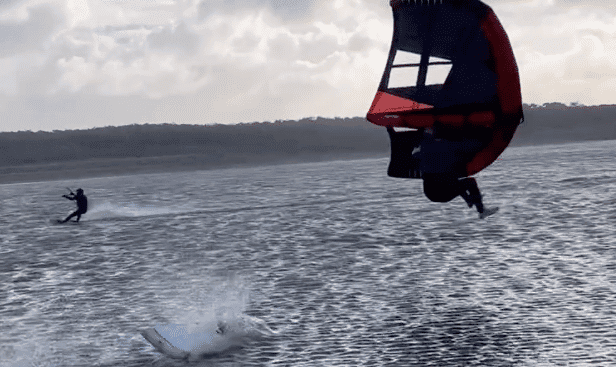
For wing foiling, your safety gear consists of just a few items: a helmet, an impact vest, a board leash, a wing leash, and a wetsuit suitable for the water. At AFS, we recommend that you wear a helmet and impact vest from your very first session. There’s a rigid foil under your board. If you fall, your gear could hit you.
AFS does not sell helmets or impact vests. This article provides the criteria for choosing them wisely, as well as what to check before heading out on the water. For safety guidelines (spot, wind, school), read “Wing Foil: The Dangers and How to Avoid Accidents.” For boarding gear, everything is on the wing foil page.
Why wear a helmet when wing foiling?
A helmet protects your head from impacts with your own equipment. The foil can cut you and cause serious injuries during an uncontrolled fall. The board can cause a violent impact or even a fracture.
Speed increases the risk. Once you’re in the air, the faster you go, the more sudden the fall is likely to be. This is true for beginners who take off without control as well as for experienced riders who push their speed.
A helmet protects your head, not the rest of your body. That’s why we pair it with a protective vest.
How do you choose a wing foil helmet?
- A helmet designed for water sports. A bike or ski helmet is not designed for use in water. In Europe, the standard of reference is EN 1385, which is designed for canoeing, kayaking, and whitewater sports helmets. This is the standard found on kitesurfing helmets. For wing foiling, look for a helmet of this type.
- A fit with no play. The helmet shouldn’t move when you shake your head. Try it on before you buy it—with your balaclava on if you’re sailing in the winter.
- A properly adjusted chin strap. A helmet that comes off on the first fall won’t protect you.
- A helmet you actually wear. Choose a style that’s comfortable enough to wear for the entire session.
Impact vest or life jacket: What’s the difference?
When wing foiling, you usually wear an impact vest. It serves two purposes. It protects your torso when you fall or take a hit. It also provides a little buoyancy when you’re swimming next to your gear.
This buoyancy is only supplementary. An impact vest is thinner than a life jacket and is not a substitute for one. If you’re not a strong swimmer, or if you’re sailing far from shore, ask your school for advice.
How do you choose a wing foil impact vest?
- Close to the body. It shouldn’t ride up under your arms when you’re in the water.
- Loose at the shoulders. You should be able to hold your wing with your arms outstretched without any discomfort.
- Compatible with your harness, if you use one. Try them together before you buy.
Leashes: Never let your gear out of your sight
Leashes keep you from losing your wing and board when you fall. A board drifting away without you means a long swim—sometimes out to sea. Basic rule: never let go of your board.
- Surfboard leash: fastened around the waist or ankle.
- Wing leash: secured to the wrist.
- Knots: Tight, with a little slack in the cord in case the knot slips.
- Wear and tear: Replace your leash after heavy use. Don’t wait until it breaks in the middle of a session.
AFS offers its own leashes:
The wing leash and other parts are listed on the accessories page.
One-piece suit and booties
A wetsuit and neoprene booties, suited to the water temperature, reduce the risk of hypothermia. They also protect you from scrapes and minor bumps.
What You’ll Need Starting with Your First Session
If you’re just starting out, none of the items on this list are negotiable:
- a helmet;
- a high-visibility vest;
- a board leash and a wing leash;
- a onesie and booties appropriate for the season.
As for the sport itself, read up on what gear you’ll need to get started with wing foiling, or usethe resources below to find the right setup for you. And take some lessons: we’ll tell you where to learn wing foiling.
Equipment Checklist Before Heading Out on the Water
- Put on your helmet and vest while on the ground, during preparation. It saves time.
- Helmet chin strap fastened, vest adjusted.
- Leashes show no visible wear; knots have been checked.
- When launching: attach the board leash first, then the wing leash to your wrist.
For everything else (priorities, spot, weather), read about the priorities on the water when wing foiling.
What about downwind?
When riding downwind, you’re moving away from your starting point: you’ll need more than just a helmet, a life jacket, and leashes. The gear you should bring is detailed in the article on the dangers of wing foiling.
Frequently Asked Questions
Do you need a wingfoil helmet to get started?
Yes, we highly recommend it. Beginners often fall, and they can’t control their falls. The helmet protects their head from impacts with the board and the foil.
Is a wingfoil impact vest enough to keep you afloat?
It helps you stay afloat when you’re swimming next to your gear. It is not a life jacket and is not a substitute for one.
Where can I buy a helmet and a protective vest?
AFS doesn’t sell them. Go to a water sports store and try them on before you buy, along with your wetsuit and harness if you have one.
When should you replace your leash?
After extensive use, or as soon as the cord or fasteners show signs of wear.
Once you’re all set, choose your gear: foils, wings, and boards are listed on the wing foil gear page.