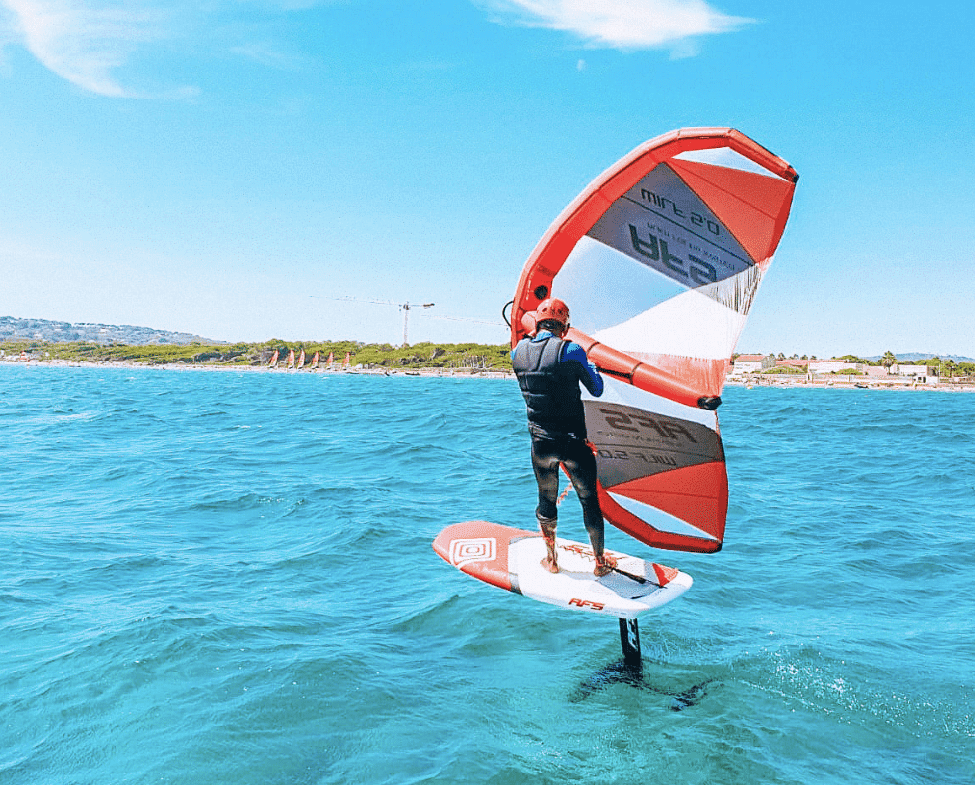
Wingfoiling, synonymous with freedom on the water and unique sensations, is attracting a growing number of enthusiasts. But where can you practice it? How do you get started? Finding the ideal spot and the right advice are essential for making rapid progress while sailing safely. The goal: to combine gliding and pleasure!

How do I start wingfoiling?
Wingfoil, a new dimension in gliding
Do you dream of learning to fly over the water with an incomparable feeling of freedom and gliding? Wingfoiling is for you! This water sport, a combination of windsurfing, kitesurfing, and surfing, offers an incredible experience that is accessible to everyone. But where to start?
The basics of learning
To begin wingfoiling, it is essential to master a few fundamentals:
- Take lessons: group or private lessons are the key to learning the basics of wingfoil quickly and safely. In sailing schools, a qualified and experienced instructor will guide you step by step, correcting your mistakes to ensure optimum progress. Good advice from an experienced friend is just as valuable. Or take advantage of the many video tutorials available on Youtube and via applications and social networks.
- Choosing the right spot: when starting out in wingfoiling, choose shallow areas (at least 1.50 m), sheltered from strong winds and with fewer people. Lagoons, lakes, or sheltered beaches are perfect for beginners: the wind is generally gentler and the water calmer, offering ideal conditions for learning in complete peace of mind.
- Test and rent equipment: before you buy wing foil equipment, take advantage of test events organized during competitions, by surf shops, or directly by the brands. This will allow you to try out different equipment and better determine what suits your level. You can also rent suitable equipment to familiarize yourself with the wing, board, and foil. Some stores even offer equipment for testing, which is an excellent opportunity to refine your choice before investing.
- Getting equipped: Once you’ve fallen in love with wingfoiling, you may want to consider investing in your own equipment. Whether you opt for new or used gear, you’ll find what you’re looking for in a rapidly expanding market, with equipment to suit all levels and budgets.
First sensations
The first wingfoil sessions focus on discovering and getting to grips with the wing, followed by learning how to balance on the board. You will start by sailing without taking off, before practicing lifting the board out of the water and finally maintaining stable flight above the surface. Over the course of the sessions, you will learn how to generate power with the wing, manage your trim in flight, better understand the lift of your foil, perform turns and transitions… and finally sail independently.
Key learning stages
- Handling the wing: learning begins with steering the wing on land, to understand how it works in relation to wind strength and direction, using the handles or boom to help you hold it. Then, head out onto the water with the board still flat on the surface, where you will practice maneuvering the wing and generating traction while feeling the power of the wind. This step is essential for developing your feel and control before attempting to take off.
- Mastering the board: sitting, then standing on the float. This stage allows you to get to know your wingfoil equipment better, while gradually discovering the sensation of gliding and the stability needed to evolve on the water.
- Combine the two: once you have mastered the basics, you can combine the simultaneous action of the board and the wing and start moving across the water, picking up speed to finally take off and ride long edges (waterstart).
- Maintain planning: keep flight stable for as long as possible thanks to the lift generated by the foil and the traction of the wing thanks to speed and wind.
The benefits of wingfoil
Wingfoiling is a comprehensive sport that works many muscles. It helps develop your strength, endurance, and balance. In addition to its physical benefits, it is a very fun activity that offers the perfect combination of exercise and relaxation.
In short, wingfoil is a sport that’s obviously fun, accessible to all, and that progresses quite rapidly as long as you sail regularly and follow the advice given.
How long does it take to learn wingfoil?
The variable duration of apprenticeships
The question of how long it takes to learn wingfoil is often asked, and the answer depends on several factors:
- Your initial level: if you already practice water sports such as windsurfing and kitesurfing, or even surfing, stand-up paddleboarding, or sailing, you will have a definite advantage. Your understanding of balance on the water and your feel for the wind will help you better control your stability on your board and the traction and steering of your kite. This will allow you to progress more quickly, that’s almost guaranteed!
- Your assiduity: the more you practice, the faster you’ll progress.
- Weather conditions: a steady, moderate wind of around 20 knots is perfect for learning wingfoiling. Weather conditions play a key role in your progress, influencing both wind strength and water conditions. A spot with flat (or slightly choppy) water offers ideal conditions for beginners, as it allows you to focus on learning without too many distractions.
- The quality of instruction: an experienced instructor will teach you the right techniques, helping you progress more quickly. Thanks to their expertise, they will be able to advise you based on your level and help you correct your mistakes.
- Equipment: Choosing the right equipment is crucial when you’re starting out in wingfoiling. Don’t underestimate it! Do your research at sailing schools, specialist shops, and brands, and consult expert reviews online. A foil that’s too small, a wing that’s too big, or a board that’s not voluminous enough can seriously slow down your progress and even discourage you. Choosing equipment that’s suited to your level is essential for an enjoyable and effective learning experience.
And if I don’t come from a board or water sports background, how long will it take me to progress in wingfoil?
In general, it takes several sessions to master the basics of wingfoiling. Of course, this depends on each individual. Some people are very athletic, while others are less so. Age and mental and physical strength can also play a role. Let’s say that a minimum of 20 hours is necessary to fly and maintain balance over several meters when starting from scratch. The first sessions will focus on learning the fundamental techniques, such as steering the wing, maintaining stability on the board, picking up speed, and finally, taking off. With practice and good coaching, these steps will help you progress smoothly before moving on to a more advanced level. You will then be able to move on to more complex actions such as sailing upwind, practicing jibes and tacks, accelerating, surfing swells and waves, and maybe one day jumping and doing loops.
Factors that accelerate learning
- Choosing the right equipment: as mentioned above, choosing wingfoil equipment that is suited to your level and body type is essential for making effective progress. Well-chosen equipment will offer you greater comfort and control and make it easier to get started, allowing you to progress more quickly and with greater confidence.
- Watching videos: today, thanks to the magic of the internet, we have the opportunity to share our sessions and get advice directly from our own homes. Wingfoil videos are a great way to visualize the movements of an online coach and better understand the techniques. They allow you to watch practical demonstrations, analyze movements, and apply advice to refine your skills at your own pace.
The time it takes to learn wingfoil varies from person to person. With patience, perseverance and the right recommendations, you’ll soon be able to enjoy this marvellous nautical discipline and savour all the sensations it has to offer. After all, you too can experience the joys of wing foiling.

What type of spot is ideal for learning wingfoil?
Choosing the right place to learn and progress in wingfoil is fundamental.
To get off to a good start, it’s best to choose a spot with suitable weather conditions. Here are a few criteria to consider:
- The condition of the water: it must be calm, without too many waves or chop, to make it easier to start sitting down and then standing up. This also prevents violent falls and reduces the risk of injury. Before you start, it’s really important to identify any obstacles on and in the water, such as rocks, shoals, buoys, or even the depth of the water. These elements can interfere with your trajectory or put you in danger if you don’t anticipate them. Good visibility of the area is therefore essential for safe maneuvering.
- The wind: if possible, it should be steady and not too strong, so that you can manage your wing, take off smoothly and avoid being blown out in mid-flight. Avoid spots that are too exposed to gusts of wind or strong currents.
- Sailing speeds: start by sailing crosswind to get used to gliding and handling your wingfoil equipment. Then learn how to sail upwind as quickly as possible. At first, it’s easy to drift, so knowing how to sail at different speeds, especially upwind, will make you more comfortable going where you want while sailing.
- Wing foil spot traffic: a spot with few people on the water offers the advantage of being able to focus fully on your riding. The more space you have on the water, the better you can focus on your own technique and progress at your own pace. All while enjoying an even more peaceful environment.
- Infrastructure: the presence of a wingfoil school, sailing club, or equipment rental company at the spot can be a real asset. This can give you peace of mind and perhaps provide you with valuable advice about the location.
Ultimately, wingfoiling is much more than just a water sport: it connects you with nature and allows you to adapt to what it has to offer, while remaining respectful of the environment. Some sessions will be better than others, and vice versa. It’s a super comprehensive activity that combines balance, coordination, and intense fun. Physically demanding and super fun, the wingfoil mindset is firmly rooted in many practitioners today. Disconnect, push yourself, and meet other riders to share your crazy sessions. So, what are you waiting for? Take flight!
