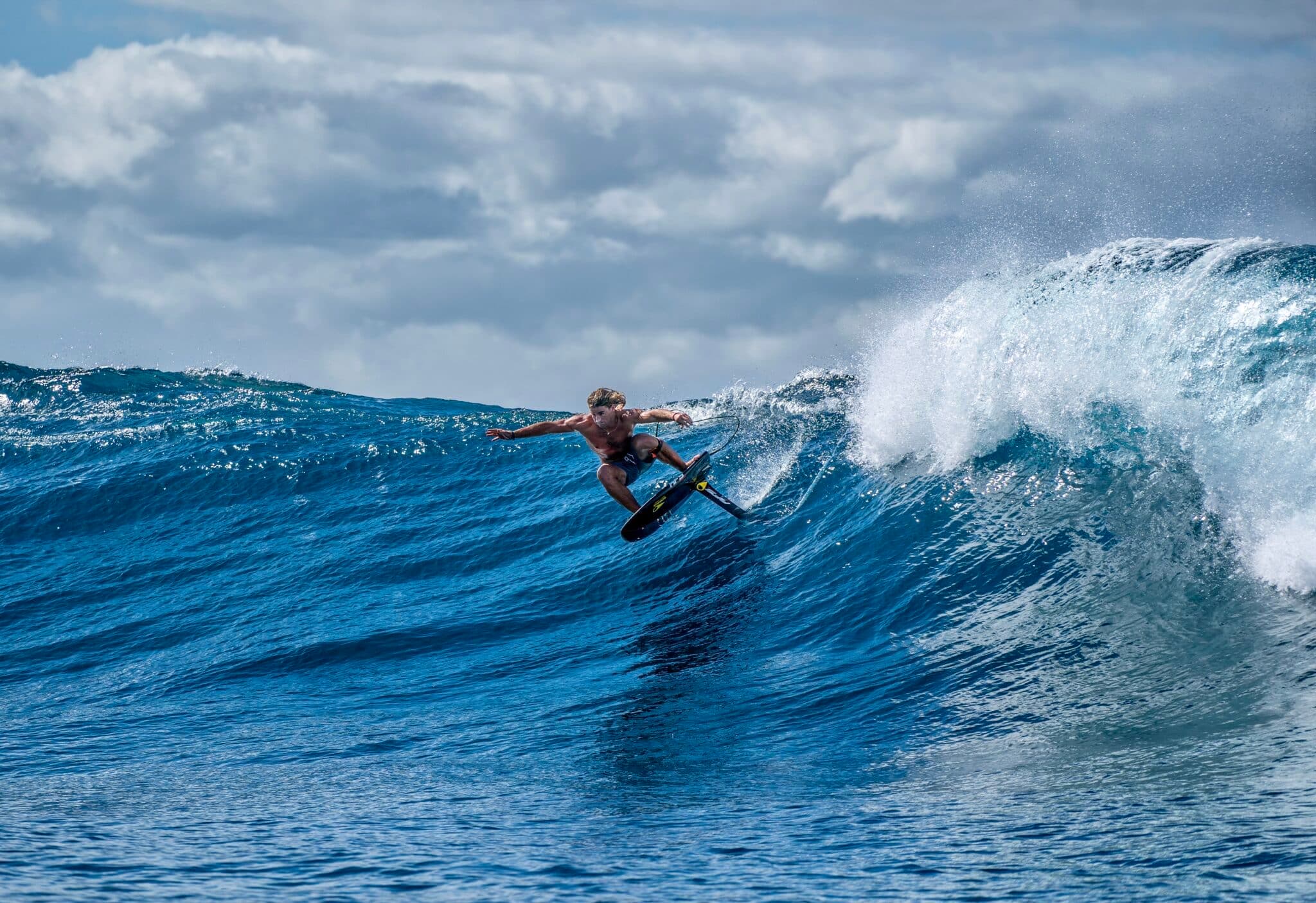
In foil surfing, safety comes down to five things: pick an easy spot, learn to fall away from your foil, wear the right gear, use a leash and follow right-of-way rules in the lineup. Under your board there is a rigid foil. When you fall, your gear can hit you or someone else. Here is what to know before your session.
Is foil surfing dangerous?
There is no such thing as zero risk. The foil can cut and cause a serious injury in an uncontrolled fall. The board can cause a blow or a fracture. The faster you fly, the harder the fall can be.
The risk also applies to others. On a wave, you share the water with surfers, bodyboarders and sometimes swimmers. Most of the rules below protect them as much as you.
Choosing your spot and your wave
For your first sessions, we recommend a soft wave or whitewater, with few people around. Ideally, a long wave with enough depth. Until you control your line, stay away from the peak.
- No shore break. A foil and a wave breaking on the sand don’t mix. A rising tide can create one.
- Enough depth. The water must be deeper than your mast plus your wing, across the whole area you ride.
- No obstacles. Spot rocks, reefs and shallow areas before you paddle out.
- Few people. Avoid crowded peaks and swimming areas. Go where there is room.
- Local rules. Some beaches restrict or regulate foiling. Check local rules and lifeguard flags before you go.
For the takeoff and your first flights, we cover the technique in Getting Started with Foil Surfing: Equipment, Takeoff, and First Flights.
How do you fall away from your foil?
The golden rule: never fight the foil’s movement. If you aim left and the foil heads right, your surfer’s reflex is to push hard to bring it back in line. That only sharpens the turn, and you often end up in a violent fall.
The right reflex: don’t insist. As soon as you feel you are losing control, let go and jump to the side opposite the foil.
In flight, the margin for error is small. Keep your moves light and precise, never abrupt.
Underwater, protect your head with your arms in case the foil or the board comes back at you.
Helmet and impact vest for foil surfing
We recommend wearing a helmet and an impact vest from your very first session. The helmet protects your head, the impact vest your upper body. The vest adds a little buoyancy, but it does not replace a life jacket. Add a wetsuit and neoprene booties suited to the water temperature.
To choose your helmet and vest, read our guide Wing Foil Helmet and Impact Vest: How to Choose Your Safety Gear, written for wing foiling.
Do you need a leash for foil surfing?
Yes. The French Surfing Federation states that a leash is mandatory. It keeps your board, and the foil under it, from heading into the wave toward other people.
- Use a straight leash on your ankle, just as you would on a regular shortboard. You sometimes fall from height, so pick a leash that’s long enough.
- Check its condition and attachments before every session.
- Replace it after heavy use, before it breaks mid-session.
- Never let go of your board: paddling back on it beats swimming back with nothing.
Find our Board Straight Leash in the shop.
Who has the right of way in foil surfing?
In the lineup, surfing rules apply. The French Surfing Federation sums them up in its foil FAQ (2021, in French):
- One wave, one rider. If someone is already on the wave, don’t go.
- The rider closest to the peak has priority. That is the person nearest to where the wave breaks.
- No snaking. Taking off on the inside of a rider who already caught the wave breaks the rules.
- One wave at a time. If you link a second wave, priority stays with the rider starting theirs.
- Ask before sharing a wave. Look around and talk to others before going together.
- To paddle out, go around the impact zone. Don’t paddle into the path of riders on a wave.
A foil adds one more constraint: you go further and faster on the same swell. Keep a safe distance from others at takeoff, along your whole line and if you fall. If someone is stopped in front of you, give them a wide berth. Never turn without looking around first.
Before every session: the checklist
- Tell someone you are going out and where, even for an hour.
- Avoid riding alone. Don’t go out in a thunderstorm.
- Check that your foil is properly assembled and tightened.
- Check the condition of your leash.
- Look at the tide, the wave size and the crowd.
- Take breaks: fatigue makes your moves less precise.
If you are a beginner, take lessons with a qualified instructor.
Foil surfing safety FAQ
Is foil surfing more dangerous than surfing?
The foil adds a risk regular surfing doesn’t have: a rigid blade under the board that can hit you or others in a fall. Easy conditions, falling away from the foil, a helmet, an impact vest and a leash reduce that risk.
Do you need a helmet for foil surfing?
We recommend wearing one from your very first session, along with an impact vest.
Can you foil surf alone?
Better not. If you do go out alone, tell someone your spot and when you plan to be back.
Is foil surfing allowed at every beach?
No. Rules vary from one beach to another. Avoid swimming areas and check local rules and lifeguard flags before you paddle out.
Do you need to know how to swim to foil surf?
Yes. It is the first requirement before getting in the water, even before reading a wave.
What wave is best for learning to foil surf?
A small, soft wave or whitewater, with no shore break and few people around.
What gear do you need to start?
Use our foil finder to find your setup, or ask an AFS expert through our contact form.
Safety is part of your progression. Choose easy conditions, learn to fall away from your foil and respect others in the lineup. For gear, explore our foil surfing range: foils made in France at our factory in Brittany, with a 2-year warranty.