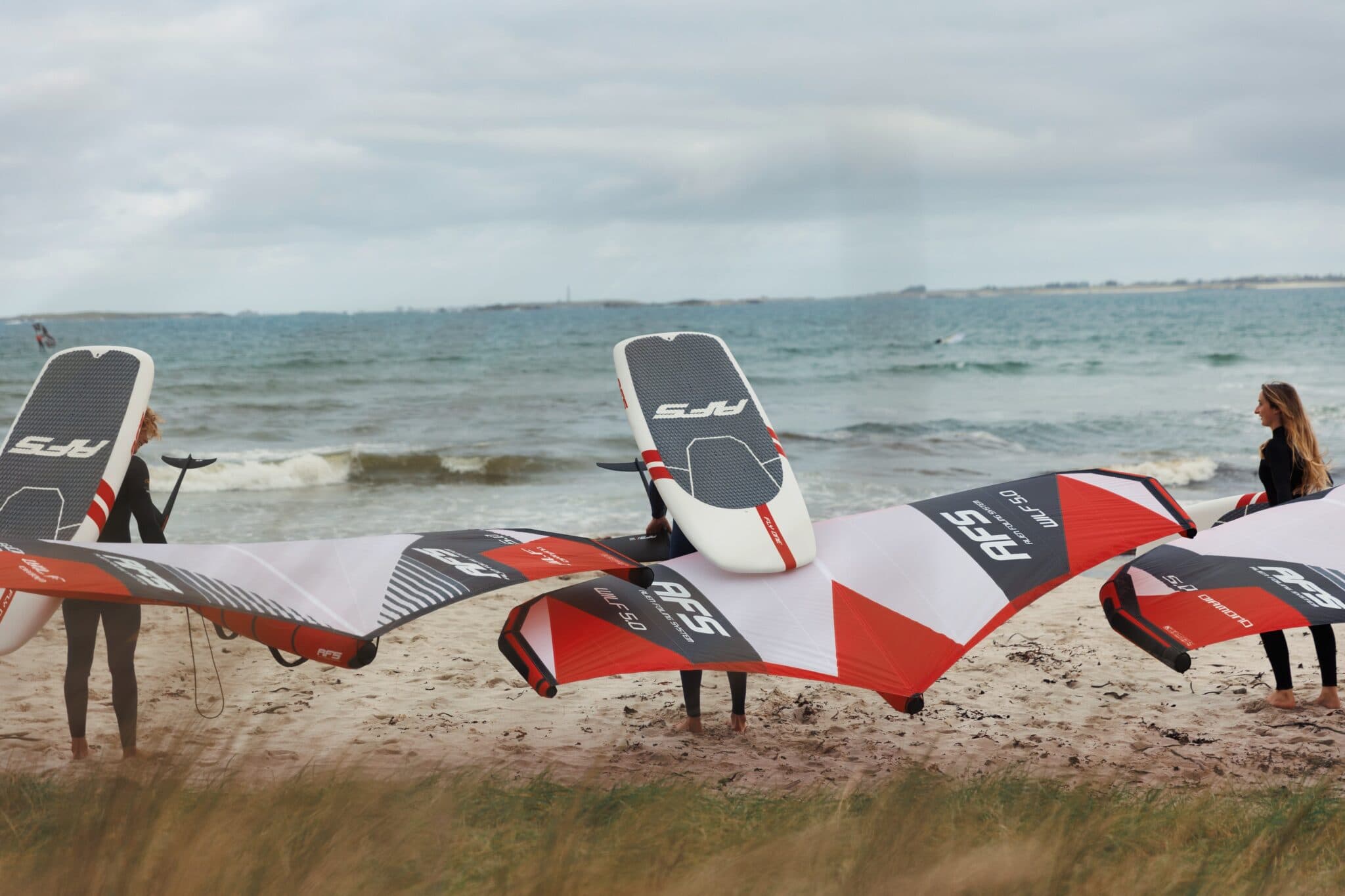
A popular watersport (and it’s not over yet), wing foiling is a new aquatic discipline that is attracting more and more enthusiasts to the spots. At sea, on the ocean, on a lake or even a pond, we can practice it anywhere. As long as it’s allowed! A minimum of wind and water, with a depth of at least 1.50 m, is enough to take off and glide. Without necessarily putting yourself in danger. That’s why wingfoiling has become so popular since the summer of 2019. Whether you’re already a fan of water sports or a complete novice in this world, anyone can get started. Just don’t overestimate your abilities and learn to sail at your own pace, without rushing things.
Here is a simple guide to your first experience of snowboarding… And how to choose the best board for your first sessions!

Where can I buy wing equipment?
To practice wingfoil, you need the right equipment to get up to intermediate level quickly… And to sail comfortably and safely. When it comes to equipment, there are several criteria to choose from for new enthusiasts of this water sport.
Wing foil brands

Our sport is constantly evolving, and several brands offer increasingly high-performance wing equipment suitable for all levels. Choosing the right wingfoil brand can seem complicated, but at AFS Foiling, we do our best to help you choose the right gear. We offer a wide range of products online for all levels. On the other hand, each practice requires a specific wingfoil board (+ hydrofoil + wings). For example, if you prefer to ride on flat water, chop (freeride board), waves, swell, or even jump. As for prices, they can vary considerably from one brand to another. AFS Foiling offers end-of-series equipment, sometimes at lower prices.
Surf shops

Wing shops are also great places to find wingfoil equipment and the right board model for you. They offer a wide range of boards, wings, and foils to suit your level, from beginner to expert. What’s more, the staff are trained to advise you on which products to choose based on your size, skill level, and wind/wave conditions.
Second-hand equipment

Online platforms and groups on social networks are also an excellent source for finding used wingfoil gear. This allows you to get started at a lower cost, while benefiting from the experience of more experienced riders. The advantage of specialist second-hand websites is that it is often possible to negotiate the price. Whether in person or by mail, anything is possible before purchasing a wing board. However, always ask for as many photos as possible and ask all the relevant questions if the sale is being made remotely. This is to avoid ending up with a cracked board that takes on water. The wing market is currently undergoing rapid change. It is now becoming easier to find the right equipment with the right tips.
What are your tips for getting started with wing foil?
Getting started with wingfoil may seem complex, but with the right advice and a progressive approach, you can quickly master the art of flying and winging to your heart’s content! Here are a few recommendations to get you started on your wingfoil adventure.
1 – Choosing the right equipment
Choosing the right board is extremely important when starting out with wing foiling. First of all, the board needs to be large. As for the foil, its purpose is to keep you gliding above the water’s surface, so its surface area is important and should be between 1500 and 1800 cm² depending on your weight. Finally, the wing allows you to propel yourself using the wind and ranges from 4 to 5 m² (or even 6 m²) depending on your size.
2 – Learning basic techniques
In wing riding, it’s essential to learn the right methods, including foot placement and steering the wing to take off and maintain the board’s attitude once in the air. Today, many sailing schools offer their services throughout most of the year, throughout France and abroad. Private or group lessons, anything is possible. Unless you are lucky enough to have friends who can advise you.
3 – Practice in favorable weather conditions
You can’t start wingfoiling just anywhere. It’s best practiced on calm water and in light winds (not too light either)… Let’s say a wind range of around 15-20 knots minimum. This allows you to familiarize yourself with the equipment and fly fairly quickly without having to pump. So you don’t get too tired. Being stable makes it easier to progress… It’s an essential criterion for gaining confidence and improving your level.
How much float do I need to start wingfoiling?
Whatever your level, you need to float on your knees, then stand, before attempting to take off. This will enable you to fly without forcing yourself. To get started, you need a wing foil board that accepts your weight, so you don’t sink while you’re still glued to the surface of the water. And enough maneuverability to control your sail and stay stable once you’re on your float. The minimum board volume required to float is calculated based on the weight of the wingfoiler. In general, for a beginner wingfoiler, it is recommended to choose a volume greater than the rider’s weight, i.e., a board of 30 to 40 liters for comfortable stability and buoyancy. Or even 35 to 50 liters for even more comfort. For example, a 70 kg wingfoiler would opt for a 100 to 110 liter board to start with. And if they have never windsurfed before, they should aim for something even bigger. This extra volume provides the stability needed to sit or stand before takeoff (water start). In addition, a larger board prevents you from sinking too far into the water and makes it easier to get to grips with the wing. This helps you progress more easily.
| Rider weight | Recommended volume for beginners |
| 60 kg | 95 to 110 liters |
| 70 kg | 105 to 120 liters |
| 80 kg | 115 to 130 liters |
| 90 kg | 125 liters to 150 liters |
Note that a board with a higher volume allows you to maintain better balance, making the different phases of takeoff easier. AFS Foiling does everything possible to ensure that each of you can learn wingfoiling at your own pace. Finally, a voluminous, thick board is ideal for learning the basics, especially in light winds. Take the time to float and then fly, making sure your first transitions are smooth. As you progress, you will be able to ride smaller boards. During their very first session, some people even opt for a stand-up paddleboard (SUP), without a foil. This allows them to learn how to steer their sail without having to worry (too much) about balance. The volume provides buoyancy, but the size and shape of the wing board offer maneuverability and attitude control once airborne.

What size board should I use to start wing foiling?
In addition to volume, other characteristics come into play: the size of the board also plays a role in getting started with wingfoiling. The length and width of a board influence its maneuverability, stability, and ease of use for first flights. The longer a board is, the easier it will glide on the water. For beginners, it is therefore advisable to choose a fairly long board… This will make it easier to water start and fly faster. On the other hand, a shorter board offers tighter turns and more technical maneuvering, which is reserved for the more experienced. Furthermore, the maneuverability and lift of the board vary depending on its width. The wider the board, the more stable it is. But if it is narrow, it will be more responsive and maneuverable. Be patient, foiling is a sport that has to be earned… you’ll soon be able to ride a much more radical board!
For a beginner, a longer (between 5’5″ and 6′ = 165 to 190 cm) and wider (around 70 cm) board is recommended. Once again, it all depends on your size. This is to allow for mistakes and give you more space on the deck of the board. A long, wide board makes it easier to take off and reduces the risk of repeated falls.
Recommended board sizes for wingfoil beginners
| Rider weight | Recommended board length | Recommended board width |
| Less than 70 kg | 5’1 to 5’5 | 25 to 28 inches |
| 70 kg to 85 kg | 5’6 to 6′ | 70 to 75 cm |
| Over 185 pounds | 6′ to 6’4 | 75 to 80 cm |
The inertia of a large wing foil board is also a factor to consider, as it lacks maneuverability when turning. However, it offers the advantage of taking off without too much effort. And it accelerates quite easily… quickly reaching the speed needed to take off.
Importance of shaping and construction
The board’s shape and construction are also determining factors. A board with a wide nose and tail promotes stability and maneuverability, helping beginners to stay in control. Carbon fiber or fiberglass sandwich constructions combine lightness and strength, essential for a first board. Learn more about AFS board construction.
Rigid or inflatable board?
Inflatable boards are a practical option for beginners, as they are less fragile and easy to transport. And you’ll hurt yourself less when you fall off them. This may be enough for some riders. However, rigid boards generally offer better performance for rapid progress. And they are more stable. The main idea is to have fun on the water. By choosing the ideal board size, you’ll ensure your wingfoiling sessions are enjoyable from your very first time on the water.
When you’re just starting out, choosing the right wing board for floating, riding upwind, taking off, and flying involves several criteria. However, our AFS team is here to guide you toward the right equipment for your skill level. Feel free to contact us via chat, email, or phone if you need more advice on a specific type of board that’s right for your skill level.